

Table of Contents
- Why Popcorn Ceilings Lower Home Value in Today’s Market
- Asbestos in Popcorn Ceilings: Health and Liability Concerns
- Popcorn Ceiling Removal Cost vs. ROI: What Homeowners Need to Know
- How to Remove Popcorn Ceiling: DIY vs. Professional Solutions
Last Updated: June 22, 2026
Why Popcorn Ceilings Lower Home Value in Today’s Market
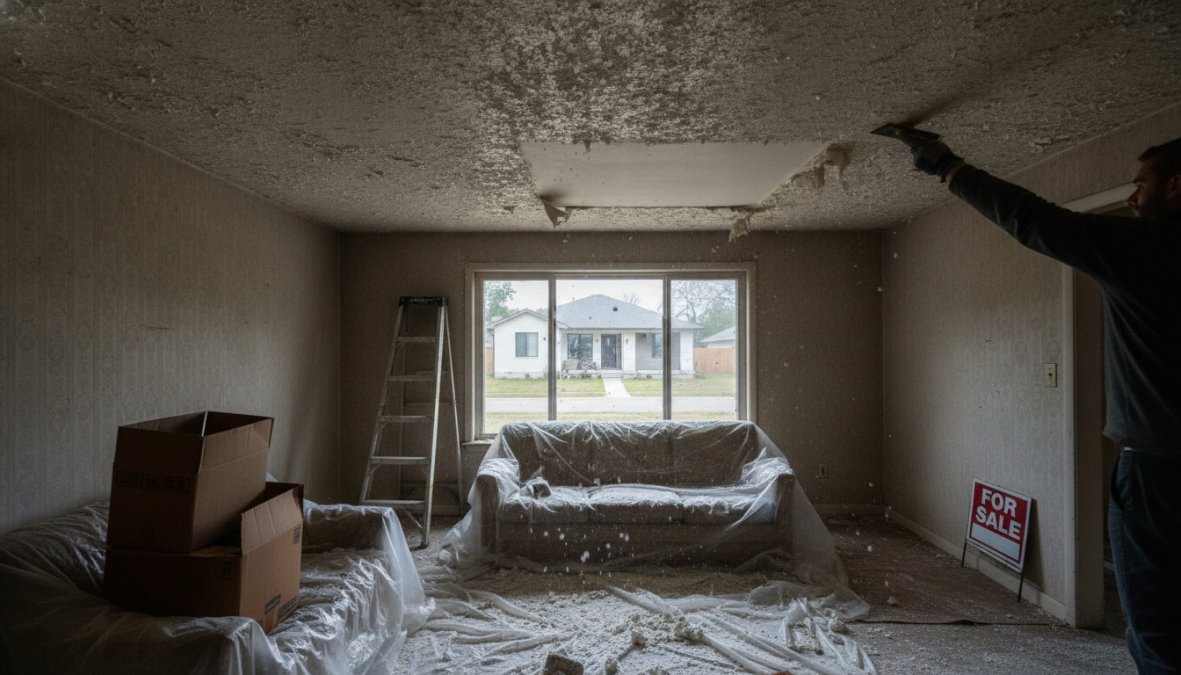
Popcorn ceilings signal a dated interior to modern buyers, and in competitive markets like Toronto, North York, and Vaughan, that signal carries real weight. Popcorn ceiling is the informal name for spray-applied acoustic texture, popular from the 1950s through the 1980s, that creates a bumpy, cottage-cheese-like surface. Builders used it to hide drywall imperfections and dampen sound cheaply.
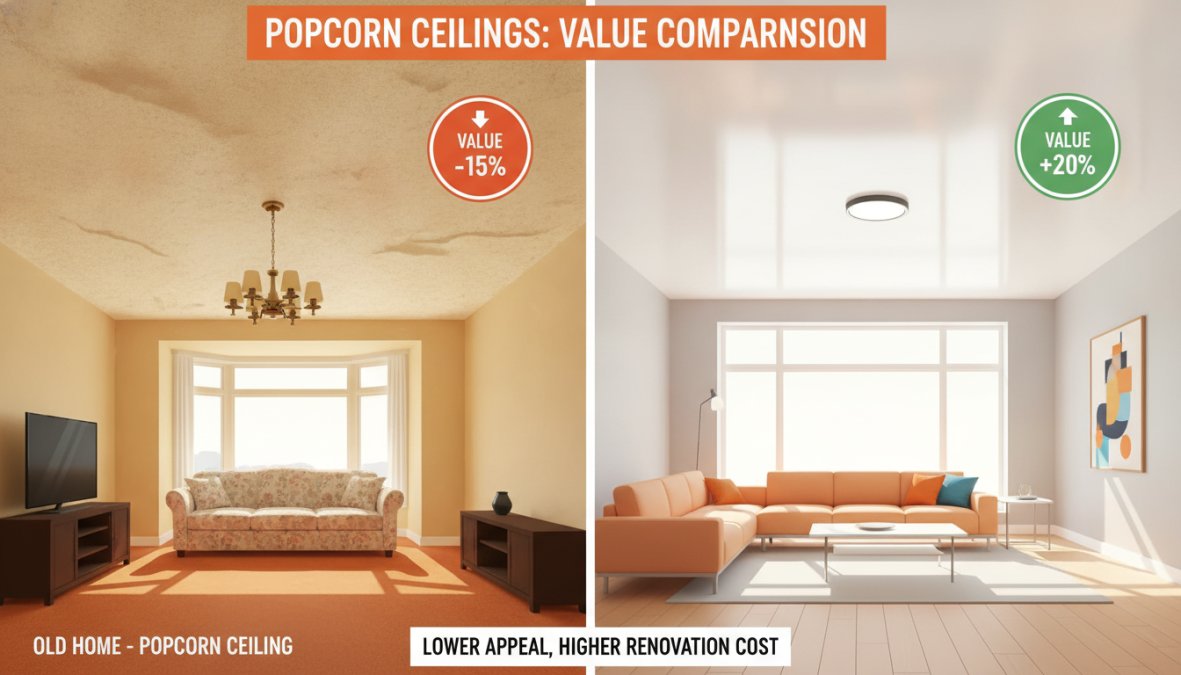
A dated ceiling triggers a mental checklist in buyers’ minds: if the ceiling hasn’t been updated, what else hasn’t? That assumption cascades into lower offers, longer days on market, and negotiations that shift firmly to the buyer. The rough texture also absorbs light rather than reflecting it, making rooms feel smaller and ceiling height feel lower, a genuine cost in condo units across North York where square footage commands a premium.
According to National Association of Realtors research on home renovation ROI, ceiling and surface updates consistently rank among the improvements that most directly affect buyer perception during home inspections and open houses.
A popcorn ceiling doesn’t just look outdated. It actively signals deferred maintenance to buyers, which affects offers, inspection negotiations, and final sale price.
Asbestos in Popcorn Ceilings: Health and Liability Concerns
Popcorn ceiling texture applied before 1980 frequently contained asbestos as a binding agent. This matters for two critical reasons.
First, health and safety: Asbestos fibers, when disturbed during scraping or sanding, become airborne and pose serious respiratory hazards. Undisturbed asbestos is generally stable, but any renovation work changes that immediately.
Second, legal liability: Ontario’s real estate disclosure requirements mean sellers must disclose known hazardous materials. Failure to disclose asbestos-containing popcorn ceiling carries significant legal exposure after the sale closes.
The practical checklist before any removal work begins:
- Identify the construction year of your home
- Assume asbestos risk if built before 1985
- Hire a certified inspector to test a sample before any scraping
- If asbestos is confirmed, hire a licensed abatement contractor
- Obtain proper documentation of abatement for disclosure purposes
According to Health Canada guidance on asbestos in residential buildings, professional testing and licensed abatement are the only safe approaches when asbestos contamination is suspected.
Never dry-scrape a popcorn ceiling in a pre-1985 home without professional testing first. Disturbing asbestos without containment creates airborne fibers that cannot be removed by standard household cleaning.
Popcorn Ceiling Removal Cost vs. ROI: What Homeowners Need to Know
The cost-benefit analysis depends on several intersecting factors.
| Factor | Lower ROI Scenario | Higher ROI Scenario |
|---|---|---|
| Home age | Pre-1985 (asbestos testing adds cost) | Post-1990 (no asbestos risk) |
| Market type | Buyer’s market with low competition | Seller’s market, high buyer demand |
| Ceiling condition | Water stains, damage present | Clean, undamaged texture |
| Removal method | Full abatement required | Standard wet-scrape and skim coat |
| Location | Rural or lower-demand area | Toronto, North York, Vaughan core |
Real estate professionals in the Toronto market note that smooth ceiling finishes are now a baseline expectation in homes listed above a certain price point, not a premium feature. Removing a popcorn ceiling in a higher-value Toronto neighbourhood moves the property from "needs work" to "move-in ready" in buyers’ minds, which affects both offer price and the number of competing offers.
If full removal isn’t feasible, a skim coat applied over the existing texture can achieve a smooth drywall finish without wet scraping. Tongue-and-groove wood planking installed over the existing ceiling is another option that adds character while avoiding asbestos disturbance.
If you’re in Toronto, North York, or Vaughan and planning to list within 12 months, get a home inspection before removal. An inspector will flag whether water damage or structural issues are hidden beneath the texture, which changes your renovation sequence entirely.
How to Remove Popcorn Ceiling: DIY vs. Professional Solutions
The DIY vs. professional removal decision comes down to asbestos status, ceiling area, and your tolerance for a messy, physically demanding project.
DIY removal is reasonable only when:
- A certified test confirms no asbestos present
- The ceiling area is small (a single bedroom or bathroom)
- You have experience with drywall repair and finishing
The standard DIY wet-scrape process:
- Test for asbestos before touching anything
- Remove all furniture and cover floors with heavy plastic sheeting
- Lightly mist the ceiling with water using a garden sprayer
- Wait 15-20 minutes for the texture to soften
- Use a wide drywall knife to scrape the softened texture away
- Repair gouges with joint compound
- Sand smooth after each coat dries fully
- Prime with a high-quality primer before painting
The finishing stage is where most DIY attempts falter. Scraping is straightforward, but achieving a genuinely smooth skim coat that looks professional under raking light requires skill. Most DIY attempts require a professional to finish the drywall work anyway.
Professional removal covers the full scope: testing, removal, skim coat application, priming, and final paint finish using quality products like Sherwin-Williams or Benjamin Moore. The result is a smooth, modern aesthetic that photographs well for listings and holds up under inspection.
According to Canada Mortgage and Housing Corporation guidance on home renovation planning, hiring licensed contractors for renovation work involving potential hazardous materials protects both the homeowner’s health and their legal standing during future property transactions.
Popcorn ceiling removal is one of those home improvement decisions where the wrong approach creates more problems than it solves. Asbestos risk, poor drywall finishing, and skipped disclosure steps all carry real consequences in Ontario’s real estate market. Professional removal brings expertise to handle everything from surface preparation to final paint finish, ensuring your home meets modern buyer expectations.
Frequently Asked Questions
Do popcorn ceilings really decrease home value?
Yes, popcorn ceilings significantly impact buyer perception and property value. Modern buyers view textured ceilings as dated and associated with older construction. Many real estate professionals note that smooth, clean ceilings are a standard expectation in today's market. The visual weight and dust-trapping nature of popcorn texture make homes feel less fresh and updated, directly affecting marketability and appraisal outcomes.
Do popcorn ceilings contain asbestos?
Popcorn ceilings installed before the 1980s often contain asbestos, a hazardous material linked to serious health risks. Even if asbestos is present, undisturbed ceilings pose minimal risk. However, removal requires professional abatement to prevent fiber release. If you're unsure about your ceiling's composition, a certified inspector can test samples. This health and safety concern is a major liability issue for sellers and a key reason buyers avoid homes with popcorn ceilings.
How much does popcorn ceiling removal cost?
Removal costs vary based on ceiling size, asbestos presence, and your location. Professional removal typically ranges from moderate to higher investment depending on hazardous materials testing and abatement needs. After removal, skim coating and finishing add to the total. However, the ROI is often strong, smooth ceilings boost curb appeal and resale value. Contact Soca Services for a free estimate tailored to your Toronto-area home's specific needs.
Is it worth removing popcorn ceilings before selling?
Yes, removing popcorn ceilings before sale is often a smart investment. Smooth ceilings improve home appraisal value, enhance buyer perception, and increase marketability significantly. Homes with modern ceiling finishes appeal to a broader buyer pool and typically command higher prices. The cost-benefit analysis favors removal in most markets, especially in competitive areas like Toronto and Vaughan where buyers expect updated interiors. Professional finishing ensures a polished, high-value appearance.
This article was written using GrandRanker



2 Comments