


Planning to refresh your home with a new coat of paint is an excellent decision. However, before selecting colours, the primary question for most homeowners is understanding the potential expense. What is the typical cost for painting a house interior?
In the Greater Toronto Area (GTA), the average cost for professional interior painting ranges from $2.50 to $7.00 per square foot. This price provides a reliable estimate for budgeting, as it generally includes skilled labour, necessary preparation, and quality paint.
Your Guide to Interior Painting Costs in the GTA
Budgeting for a painting project is the first critical step in bringing your vision to life. A professional quote is not a single price tag; it is a combination of factors. The final cost depends on the quality of materials (paint), the extent of prep work required, and the overall complexity of the job. For homeowners across Toronto, Mississauga, and the wider GTA, this guide breaks down the costs to help you plan effectively.
While the $2.50 to $6.00 per square foot range is a solid starting point, several key factors influence the final price. For example, painting a new construction condo in Mississauga with pristine walls will be more straightforward and less expensive than painting a historic home in Toronto that requires extensive plaster repair. The current condition of your walls is one of the most significant variables affecting your quote.
To provide a clearer financial picture, the following table outlines estimated costs for different home sizes across the GTA.
Estimated GTA Interior Painting Costs at a Glance
| Home Size (Square Feet) | Average Cost Range (CAD) |
|---|---|
| 1,000 sq. ft. | $2,500 – $6,000 |
| 1,500 sq. ft. | $3,750 – $9,000 |
| 2,000 sq. ft. | $5,000 – $12,000 |
| 2,500 sq. ft. | $6,250 – $15,000 |
| 3,000 sq. ft. | $7,500 – $18,000 |
Note that these figures are estimates. The final price will always depend on the specific details of your project, which are detailed below.
What Your Initial Estimate Usually Includes
A quote from a reputable GTA painter is typically an all-inclusive price that bundles several core services for transparency. Here is what you can generally expect to be included:
- Labour Costs: This constitutes the largest portion of the quote, covering the painters’ time, professional expertise, and efficient execution.
- Basic Surface Preparation: This includes essential prep work such as filling minor nail holes, light sanding, and cleaning walls to ensure proper paint adhesion.
- Standard Quality Paint: Most quotes factor in two coats of a reliable, mid-grade paint from a trusted brand.
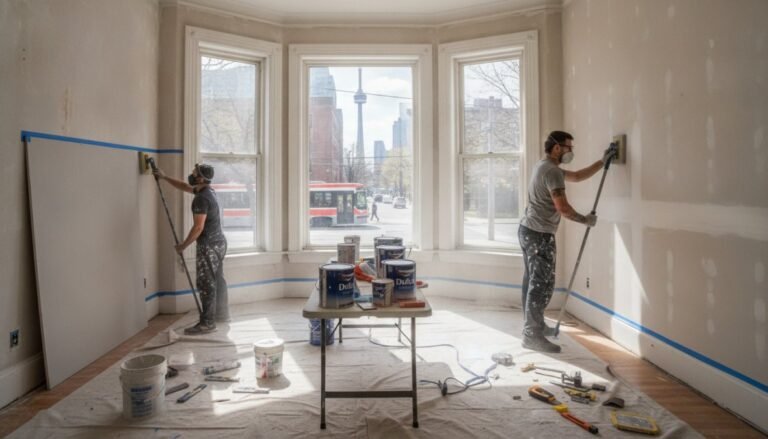
- Protecting Your Home: Professionals will cover furniture, floors, and fixtures with drop cloths and plastic to ensure paint is applied only to the intended surfaces.
A professional paint job is more than a colour change—it is a direct investment in your home’s ambiance, comfort, and potential resale value. Understanding the costs upfront ensures a smooth and stress-free transformation.
This foundational knowledge is crucial because interior painting is the easiest way to refresh any space and can significantly improve your home’s appeal.
Next, we will examine how specific factors like room type, paint quality, and regional price variations within the GTA can affect your total project cost.
Deconstructing Your Painter’s Quote
When reviewing a professional painting quote, it is important to look beyond the final number. The total cost for painting house interior projects is a composite of skilled labour, quality materials, and the unique characteristics of your home. Understanding these components provides clarity on what you are paying for.
The largest component of any quote is labour, typically accounting for 70-85% of the total bill. This cost covers not only the application of paint but also the meticulous preparation—from protecting floors and furniture to the final cleanup. This preparatory work is what distinguishes a professional result from a DIY attempt. It includes filling nail holes, sanding imperfections, and caulking trim to create a flawless, durable finish.
The Core Components of Your Estimate
A transparent quote should clearly itemize where every dollar is allocated. The price is built on three main pillars: the painter’s time (labour), the materials used, and any complexities specific to your space.
This breakdown illustrates how these three elements combine to form your final estimate.
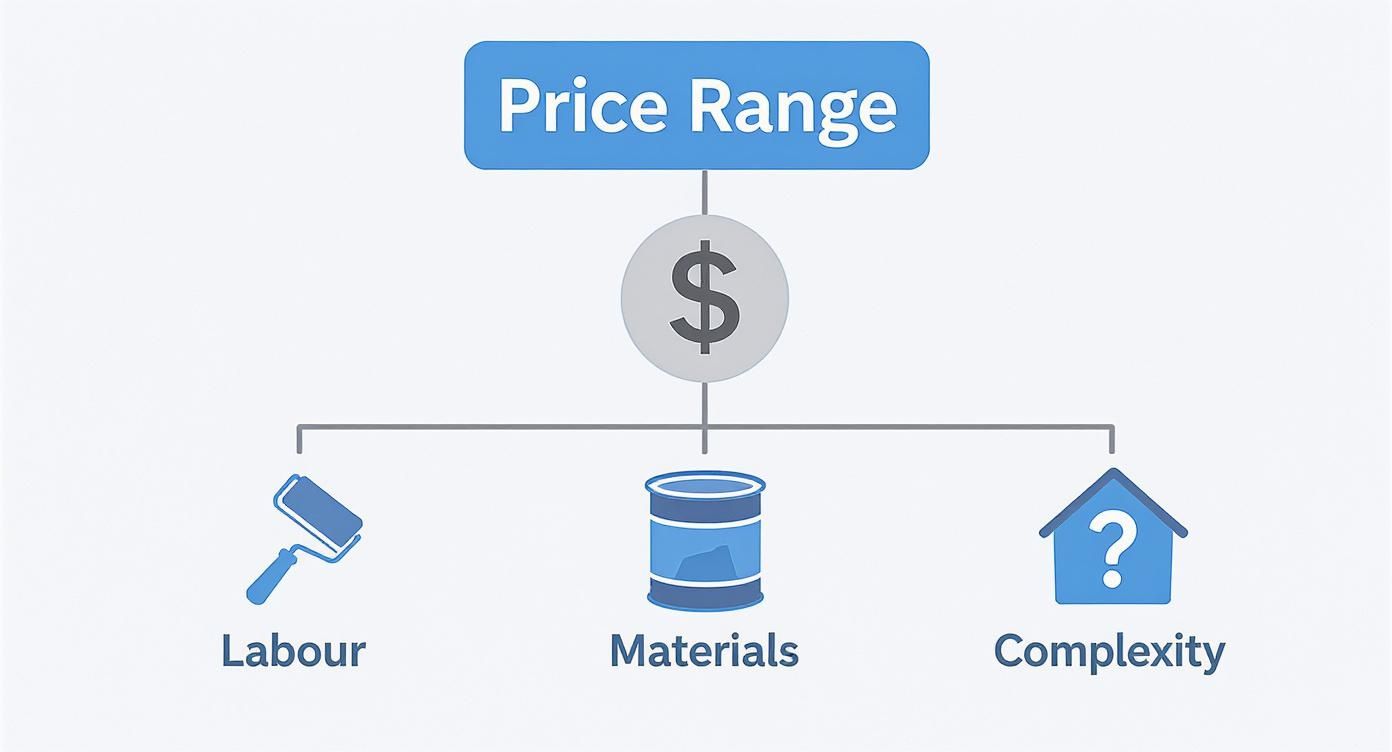
As shown, labour, materials, and job complexity are the foundational building blocks that determine the final price range.
After labour, the next significant cost is materials. This includes more than just paint; it covers primers, painter’s tape, drop cloths, rollers, and brushes. The difference between budget and premium paint lies not just in the upfront cost but also in durability, coverage, and the final richness of the colour. Higher-quality paint often results in a superior, longer-lasting finish.
A detailed quote is a hallmark of a true professional. It offers clarity and protects both parties by setting clear expectations for the scope of work, materials, and total investment.
Beyond the Basics: What Else Affects the Cost?
Every home is unique, and certain features can increase the time and materials required, thus raising the quote. It is important to discuss these “complexity factors” with your painter.
- Extensive Repairs: Significant drywall damage, plaster cracks, or water stains must be properly repaired before painting can begin, requiring extra time and specialized materials.
- Intricate Details: Painting detailed crown moulding, trim, wainscoting, or coffered ceilings demands precision and takes more time than painting a flat, empty wall. The labour cost will reflect this intricacy.
- Surface Conditions: Textured walls or popcorn ceilings absorb more paint and are more challenging to cover evenly, often increasing costs for both product and labour.
Finding the best contractor in the GTA involves seeking professionals who provide clear, itemized quotes. For homeowners in Toronto or Mississauga, obtaining detailed house painting quotes in Toronto is the most critical first step. A reputable painter will offer transparent pricing and no hidden charges, ensuring you understand the costs from the outset.
How Room Type Shapes Your Painting Budget
Not all rooms are equal in terms of painting costs. The cost for painting house interior spaces can vary significantly based on the room’s size, function, and architectural features. Understanding these differences is key to developing an accurate budget.
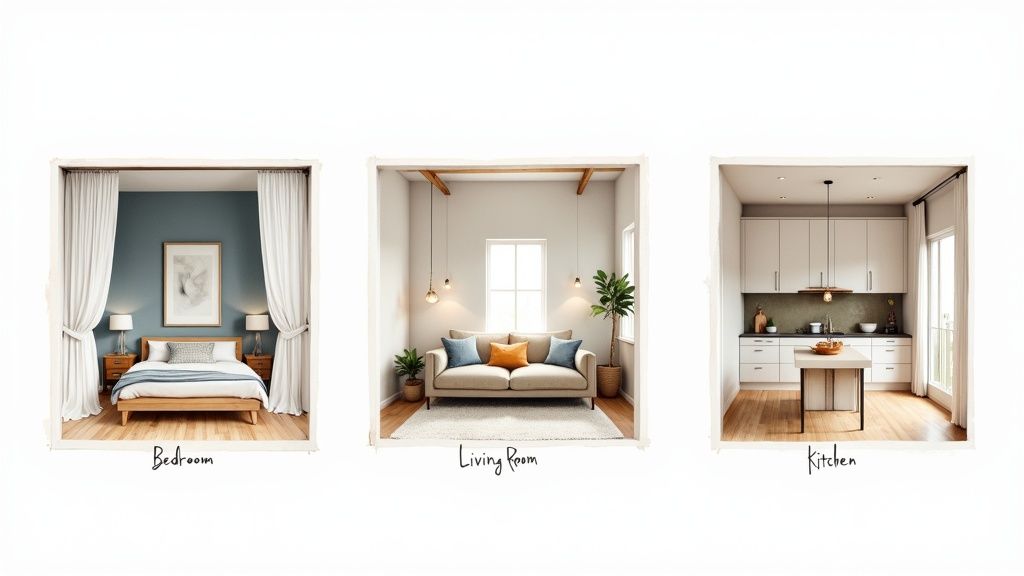
A standard 10×12 foot bedroom serves as a useful baseline. With four straight walls, a standard ceiling height, and minimal trim, this type of job is straightforward for painters. This simplicity makes it an effective benchmark for estimating the cost of more complex projects.
Scaling Up to Larger and More Complex Rooms
Living rooms often require a larger budget. They are typically larger, and many homes in the GTA feature high or vaulted ceilings, which demand more paint, specialized equipment like scaffolding, and additional labour hours.
Beyond size, living rooms frequently contain architectural details that require skilled craftsmanship.
- Crown Moulding and Trim: Detailed trim must be “cut in” by hand, a meticulous process that adds to labour costs.
- Windows and Doors: Each opening must be taped off and painted around carefully.
- Built-in Shelving or Fireplaces: These features create numerous nooks and crannies that require detailed brushwork.
Specialty Rooms: Kitchens and Bathrooms
Kitchens and bathrooms present unique challenges. Though smaller in square footage, the work is more intensive. Painters must navigate around obstacles such as cabinets, countertops, backsplashes, mirrors, and fixtures, which slows down the process considerably.
Kitchens and bathrooms are high-moisture environments that require specialized paints. A professional will recommend durable, moisture-resistant, and mildew-proof formulas. While these paints cost more, they are essential for a long-lasting finish.
Evaluating your project on a room-by-room basis provides the clearest financial outlook. For more specific pricing information, our guide on the cost to paint a room offers detailed breakdowns for homeowners in Toronto and Mississauga. Each space has unique features that will ultimately determine the final number on your quote.
Why a Painting Quote in Toronto Isn’t the Same as in Mississauga
It is a common misconception that painting costs are uniform across the Greater Toronto Area. In reality, a quote for a project in downtown Toronto can differ significantly from one for an identical house in Mississauga or Vaughan. This variation is not arbitrary; it is based on the operational costs and logistical challenges of working in different parts of the GTA.
Just as property values vary by neighbourhood, a painter’s operating costs also fluctuate. Factors such as travel time, fuel expenses, and parking challenges in dense urban areas add up. A crew working in downtown Toronto may lose a significant amount of time each day to logistics, and this time must be factored into the price.
A Tale of Two Homes: A GTA Case Study
Consider a real-world example. A painter quotes two jobs for homes with identical square footage: one a historic century home in the Annex and the other a new-build house in Mississauga. The final prices could be substantially different.
- The Annex Century Home: These older homes often have plaster walls with hairline cracks, uneven surfaces, and layers of old paint. This requires extensive prep work—sanding, patching, and priming—before the first finish coat can be applied.
- The Mississauga New Build: In contrast, a new house typically has smooth, straight drywall that requires minimal prep. This significantly reduces labour time and, therefore, cost.
This type of regional price variation is not unique to the GTA. Local market rates, housing styles, and labour costs create distinct pricing structures in every city. For example, in Los Angeles, CA, the mix of Spanish-style plaster homes and modern new builds leads to a higher-than-average cost per square foot. Details on how L.A.’s housing stock affects painting costs on Angi.com illustrate how a city’s architectural character influences project pricing.
A professional painter’s quote directly reflects the time and skill your specific property requires. The age of your home, the condition of its walls, and even your location are all part of the pricing equation.
Local Market Rates and Demand
Finally, supply and demand play a crucial role. In high-demand areas with many older, complex homes, the best painters are often booked for months. Their expertise in handling challenging prep work and detailed finishes is a premium service.
In suburban areas like Mississauga, where most homes are newer and the work is more standardized, the market may be more competitive. This can sometimes result in more moderate pricing for standard projects. Understanding these local nuances is key to creating a realistic budget for your project, regardless of where in the GTA you reside.
Finding the Best Painting Contractor Near You
Once your budget is established, the next step is to find the right team for the job. In a competitive market like the GTA, the number of options can be overwhelming. However, a structured approach makes it easier to identify a true professional.
While obtaining three quotes is standard advice, it is only a starting point. The lowest bid rarely represents the best value, particularly when a flawless finish and long-term quality are priorities. Your objective should be to find a contractor who is not only a skilled painter but also a professional, transparent, and reliable partner.
Your Vetting Checklist for GTA Painters
Hiring a painter is similar to conducting a job interview. A genuine professional will readily provide the documentation and references needed for you to feel confident in your decision.
Before signing a contract, ensure you have verified these key items:
- WSIB and Liability Insurance: This is non-negotiable. Workplace Safety and Insurance Board (WSIB) coverage protects the crew, while liability insurance protects your property from accidental damage. Always request to see current certificates.
- A Strong Portfolio: The best painters will have a collection of past projects in areas like Toronto and Mississauga. Look for work that aligns with the style and scale of your project.
- Verifiable References: While online reviews are useful, speaking directly with past clients is invaluable. Ask for contact information for recent clients and inquire about punctuality, communication, and overall satisfaction with the final result.
A detailed, written quote is the most important tool for comparing contractors. It should clearly outline the scope of work, the specific paint brand and type to be used, the number of coats, and a full breakdown of the prep work. This level of detail prevents misunderstandings and unexpected charges.
Red Flags to Watch Out For
Knowing what to look for is only half the process; knowing what to avoid is equally important. Be aware of common warning signs that may indicate a contractor is not as professional as they appear.
Be on the lookout for these red flags:
- Pressure for a Large Cash Deposit: A small deposit of 10-20% is standard. A contractor demanding a large cash payment upfront is a major cause for concern.
- Vague or Verbal Contracts: Never accept a handshake deal. All terms must be documented in a detailed written agreement. If it is not in writing, it was not agreed upon.
- Reluctance to Provide Credentials: Any hesitation to show proof of insurance, WSIB clearance, or references is a clear signal to find another contractor.
Investing extra time to properly vet your options will pay dividends. To see examples of professional-grade work and understand what to expect, you can explore the services offered by trusted local painters in the GTA.
Smart Ways to Save on Your Painting Project
Adhering to your budget does not require compromising on a high-quality finish. With strategic planning, you can lower the overall cost for painting house interior projects without sacrificing the final result. The key is to balance some hands-on effort with savvy material choices.
Labour is consistently the largest portion of any painter’s quote. Therefore, any preparatory work you can complete yourself will translate directly into cost savings.
Reduce Labour Costs With DIY Prep
Before the professionals arrive, you can tackle several simple tasks. This “sweat equity” can significantly reduce your final bill.
- Move and Cover Furniture: If possible, clear the room of all furniture. Otherwise, group items in the center and cover them securely with drop cloths. This saves the painters a considerable amount of time.
- Clean the Walls: Wipe down walls with a damp cloth to remove dust and grime. This improves paint adhesion and reduces the prep time your crew needs to bill for.
- Remove Outlet Covers: Taking off switch plates and outlet covers is a quick task for you that allows painters to work more efficiently and achieve cleaner lines.
While it may seem counterintuitive, investing in a premium ‘paint and primer in one’ product can save money. These formulas offer superior coverage, often requiring fewer coats, which reduces paid labour time.
Strategic Timing and Material Choices
The timing of your project can also affect the price. The peak season for painters in the GTA is spring and summer. Scheduling your project during the off-season, typically from November to February, may result in more competitive rates as contractors look to keep their crews busy.
Finally, avoid the temptation to purchase the cheapest paint available. This is often a false economy. Higher-quality paint not only provides a better aesthetic but is also more durable and covers more effectively. You will use fewer cans and will not need to repaint as soon. For homeowners in Toronto seeking the best value, the optimal strategy is to find affordable house painters near me who use top-tier materials.
Considering home improvement costs can also lead to a broader review of household expenses. If you are in a budget-conscious mindset, you may also benefit from tips on reducing energy consumption in your home.
Your Top Questions About Interior Painting Costs
Even with a detailed cost breakdown, you may still have questions. Here are answers to some of the most common inquiries from homeowners in the GTA.
Do I Need to Buy the Paint Myself?
No, and it is generally better if you do not. Any reputable painter in Toronto or Mississauga has preferred brands they trust and can purchase at a trade discount. This cost will be included in your quote. This ensures you receive a quality product that the painter has experience with, saving you the effort.
However, if you have a specific colour or brand preference, inform your contractor upfront. Most are willing to accommodate, though it may affect the final price.
Is It Cheaper to Paint in the Winter?
It can be. Spring and summer are peak seasons, and painters’ schedules are full. By scheduling your project during the off-season (November to February), you may find that contractors offer more competitive pricing to maintain workflow for their crews.
Additionally, the dry, cool air of a Canadian winter is ideal for paint curing indoors, free from the humidity of summer.
A professional paint job is an investment in your home. The price reflects not just the paint on the walls, but the skilled prep work, meticulous cleanup, and peace of mind that comes from a flawless, long-lasting finish.
How Long Does a Typical Paint Job Take?
For a standard room (approximately 12×12 feet), a professional crew can typically complete the job in 4-6 hours.
For an entire house, such as a 2,000 sq. ft. home in the GTA, the timeline is generally 3 to 5 days. This duration depends on the extent of prep work required; tasks like patching drywall or painting intricate trim will add to the overall time.
Ready to transform your space with a fresh, professional finish? Contact Soca Services Painting for a detailed, no-obligation quote and see why we’re the trusted choice for homeowners near you. https://www.socaservicespainting.com


One Comment