


Choosing the best paint colour for your basement, especially in a Toronto or Mississauga home where they can feel dim, is a critical decision. For an objective answer, consider this: light, neutral colours with warm undertones are almost always the winning choice. These shades are fantastic at maximizing available light to create a sense of warmth and space, making them the best option for many GTA properties.
Finding the Best Colour for Your Basement Near Me
Turning a dark, often overlooked basement into a bright, welcoming part of your home hinges on one crucial choice: the paint colour. Basements across the GTA, from Mississauga to downtown Toronto, don't get the same generous splash of sunlight as your upstairs rooms, and that's the biggest challenge to solve.
The way light—both from windows and from fixtures—interacts with your walls is the single most important factor. It will completely change how a colour looks and feels once it's actually on the wall.
You’ve probably experienced this before. A colour that looks perfect on a paint chip in the store can look drastically different under the specific lighting in your basement. This is exactly why there's no single "best" colour for every situation. It's less about your favourite hue and more about making a smart, strategic choice based on the science of light and colour psychology.
A great colour can make a small room feel bigger, bring a cozy warmth to a space that feels chilly, and set the right mood for whatever you plan to do down there—be it a family movie night or a focused home office. Taking a moment to think through these elements is the secret to getting it right.
The goal is to find a colour that doesn't just look nice, but actively fights back against the natural dimness of a basement. This is a shift from simple decorating to strategic design with colour.
To get you on the right track, this objective guide breaks down the core things you need to consider:
- The Impact of Lighting: We'll look at how the light you have—both natural and artificial—can dramatically change the way a colour appears.
- Colour Psychology: It's all about matching the feeling of the paint colour to how you want to use the room.
- Practical Paint Palettes: I'll give you specific, tried-and-true colour recommendations that consistently perform well in low-light spaces.
Making a thoughtful choice here can transform your basement into one of the most loved rooms in your house. For a closer look at the different types of paint and finishes available, our guide on a variety of basement paint options provides even more detailed advice.
Let’s quickly summarize the key decision points.
Quick Guide to Basement Paint Colour Selection
This table breaks down the most important factors to help you make a quick, informed decision when selecting the best paint for your basement.
| Consideration | Best Approach | Why It Matters |
|---|---|---|
| Lighting Source | Assess both natural light (windows) and artificial light (bulbs). Test paint swatches in multiple spots at different times of day. | Cool-toned LED lights can make warm colours look dull, while warm incandescent light can make cool colours look muddy. The same colour will look different on every wall. |
| Room's Purpose | Choose colours that support the intended activity. Calming blues for an office, energetic yellows for a playroom, or cozy neutrals for a family room. | Colour psychology is a key factor. The right hue can genuinely impact your mood, focus, and energy levels, making the space more functional and enjoyable. |
| Undertones | Opt for colours with warm undertones (yellow, pink, beige) to counteract the cool, dim nature of most basements. | Warm undertones add a sense of sunlight and coziness, preventing the space from feeling sterile or clinical, which is a common pitfall with pure whites or cool greys. |
| LRV (Light Reflectance Value) | Look for paints with an LRV of 60 or higher. This number is usually on the back of the paint chip. | LRV measures how much light a colour reflects. A higher LRV means more light bounces around the room, making it feel significantly brighter and more open. |
Thinking through these elements will guide you toward a colour that not only looks beautiful but also works hard to make your basement a brighter, more inviting space.
How Light Transforms Basement Paint Colours
We’ve all been there. You pick out the perfect paint chip under the bright lights of the hardware store, only to find it looks completely different in your basement. That’s not your eyes playing tricks on you; it’s a reality of a lower-level space.
Limited natural light acts like a filter, completely changing how a colour feels on the wall. A cheerful beige can suddenly look muddy and unwelcoming. That crisp off-white you were so excited about might just look dingy and grey.
Basements across Mississauga and the GTA often have small windows—if any at all. This means you’re relying almost entirely on artificial light, which has a massive say in the final look.
Your Secret Weapon: Light Reflectance Value
To get ahead of this problem, you need to understand a concept called Light Reflectance Value (LRV). It sounds technical, but it’s a painter’s best friend for dark spaces.
LRV is a scale from 0 (absolute black) to 100 (pure white). The number tells you exactly how much light a paint colour will reflect. A paint with an LRV of 70, for example, will bounce back 70% of the light that hits it. This instantly makes a room feel bigger and brighter.
On the flip side, a dark navy might have an LRV of only 5. It absorbs most of the light, creating a much cozier, enclosed atmosphere. For most basements, choosing a paint with a higher LRV is a brilliant strategic move.
Don't Forget About Your Light Bulbs
Since you’re relying on fixtures to do the heavy lifting, the type of light bulbs you install is just as important as what’s on the walls. The colour temperature of a bulb, measured in Kelvins (K), can make or break your paint choice.
-
Warm White (2700K–3000K): These bulbs cast a familiar, yellowish glow that feels cozy and inviting. They’re fantastic for bringing out the richness in warm colours like beige, taupe, and creamy off-whites.
-
Cool White/Daylight (4000K–5000K): With a crisper, bluer light that mimics natural daylight, these bulbs are amazing for making a room feel brighter and more energized. They pair beautifully with cooler tones like blues, greens, and true greys.
The bottom line: The wrong bulb can sabotage your paint job. A cool grey under a warm, yellow light can look murky. A warm beige under a stark, cool-toned LED might appear washed out. The trick is to match your light's temperature to the paint's undertone.
Thinking about how light and colour interact is key. For more great ideas, check out these tips on brightening a dark room.
And if your basement has exposed block or concrete, choosing the right product is crucial. Getting the right paint for concrete walls will ensure your hard work pays off. When you harmonize your light and colour choices, you can turn even the darkest basement into a beautiful, welcoming space.
Matching Colour Psychology to Your Basement's Purpose
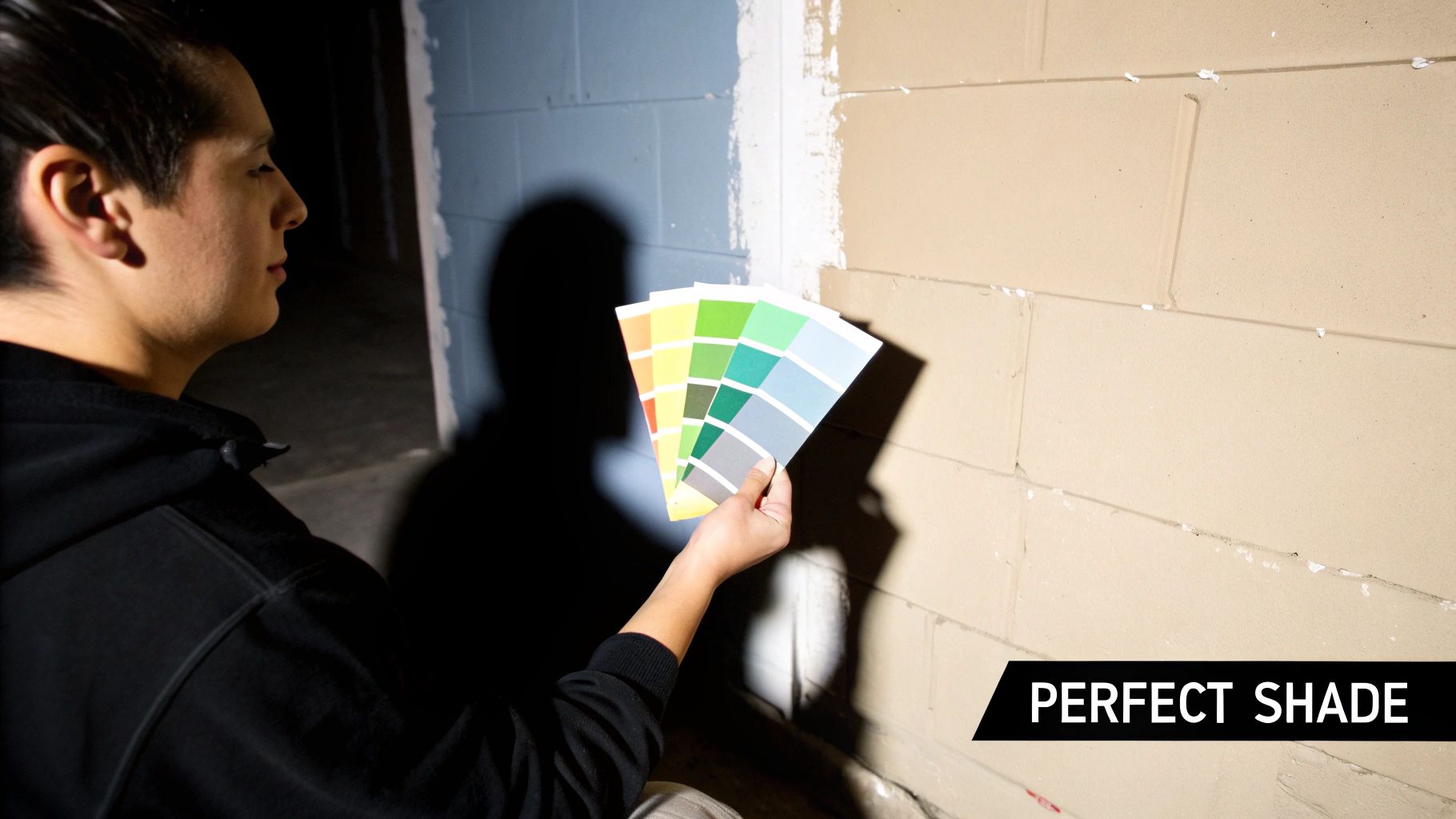
The best colour for a basement isn't just about what looks good—it's about what feels right for how you'll use the room. Colours have a surprisingly powerful, subconscious effect on our mood and energy. Your paint choice is a subtle tool that helps set the perfect atmosphere.
This is the central idea behind colour psychology. You wouldn't paint a library in a loud red. The same logic applies to your basement. When you match the colour to the room's function, you make the space more inviting and better suited for its job.
Let's say you're turning your Mississauga basement into a cozy family room. In that case, you'll want to lean into warm neutrals. Shades like greige, soft beige, or taupe wrap the room in comfort, making the space feel welcoming.
Creating the Right Vibe for Any Use
Every basement has a different job to do, and the paint on the walls can either help or hinder it. From a productive home office to a high-energy playroom, the right colour helps support the room's main goal.
Here’s an objective breakdown:
-
For a Home Office: To promote focus and reduce stress, soft, calming colours are the best choice. Light blues and muted greens are fantastic options because they’re known to boost concentration and create a sense of tranquility.
-
For a Home Gym or Playroom: For energy, use a neutral base with a bold, vibrant accent wall. A splash of sunny yellow or energetic orange can boost motivation without overwhelming the entire room.
-
For a Media Room: To get that immersive, theatre-like feel, dark colours are superior. A deep navy, charcoal grey, or rich plum can work wonders. These shades reduce screen glare and make the room feel intentionally cozy and cinematic.
-
For a Rental Suite: The objective here is broad appeal. You want a blank canvas that feels bright, clean, and spacious. Warm off-whites or light greiges are the best options, allowing tenants to easily imagine their own furniture and style in the space.
When you match colour to purpose, the paint does more than just cover the walls—it becomes an active part of the room's design, subtly encouraging the desired mood and behaviour.
We're seeing this play out in recent trends. Homeowners are moving toward warmer, more inviting tones. In fact, surveys show that roughly 42% of finished basements now feature warm, earthy colours like beige, taupe, and soft greens to make them feel more welcoming.
Aligning colour psychology with your basement's purpose is a game-changer. When you're ready to explore this further, it’s worth taking the time to understand color psychology and schemes for your home to find the perfect palette for your GTA property.
Top Paint Colour Palettes for Toronto Basements
Choosing the best paint colour for a Toronto or Mississauga basement isn't just about picking something you like; it's about understanding which palettes thrive in a space with limited natural light. Instead of getting lost in a sea of paint chips, let's look at three proven approaches that deliver the best results in any GTA basement.
Each of these palettes is a strategic choice, designed to solve a specific challenge—whether that’s making the room feel bigger or creating a specific vibe.
The Bright and Airy Palette
If your number one goal is to banish the gloom and make your basement feel as bright and spacious as possible, this is the palette for you. The secret here lies in colours with a high Light Reflectance Value (LRV), which are champs at bouncing light around the room.
But don't just think of a stark, clinical white. We're talking about sophisticated off-whites and light greys that have just a hint of warmth. These shades give you that open, airy feeling without looking cold or sterile under artificial lights.
- Best For: Smaller basements, multi-purpose rooms, and anyone aiming for a clean, modern look.
- Example Colours: Benjamin Moore's "Chantilly Lace," Sherwin-Williams' "Eider White," or Behr's "Silver Drop."
Think of these colours as the perfect neutral canvas. They’ll make the space feel bigger and let your furniture and decor be the star of the show.
The Warm and Inviting Palette
For basements that are destined to become cozy family rooms, home theatres, or a comfortable den, you’ll want to lean into warmth. This palette is all about popular greiges (that perfect blend of grey and beige) and soft, earthy tones that create an instantly comfortable, retreat-like atmosphere.
These colours absorb a little more light than their brighter cousins, but what you get in return is an undeniable feeling of comfort and intimacy. They make a space feel intentionally cozy, turning it into the perfect escape from the hustle and bustle upstairs.
It's a popular approach for a reason. Homeowners often gravitate towards these comforting palettes, as you can see below.
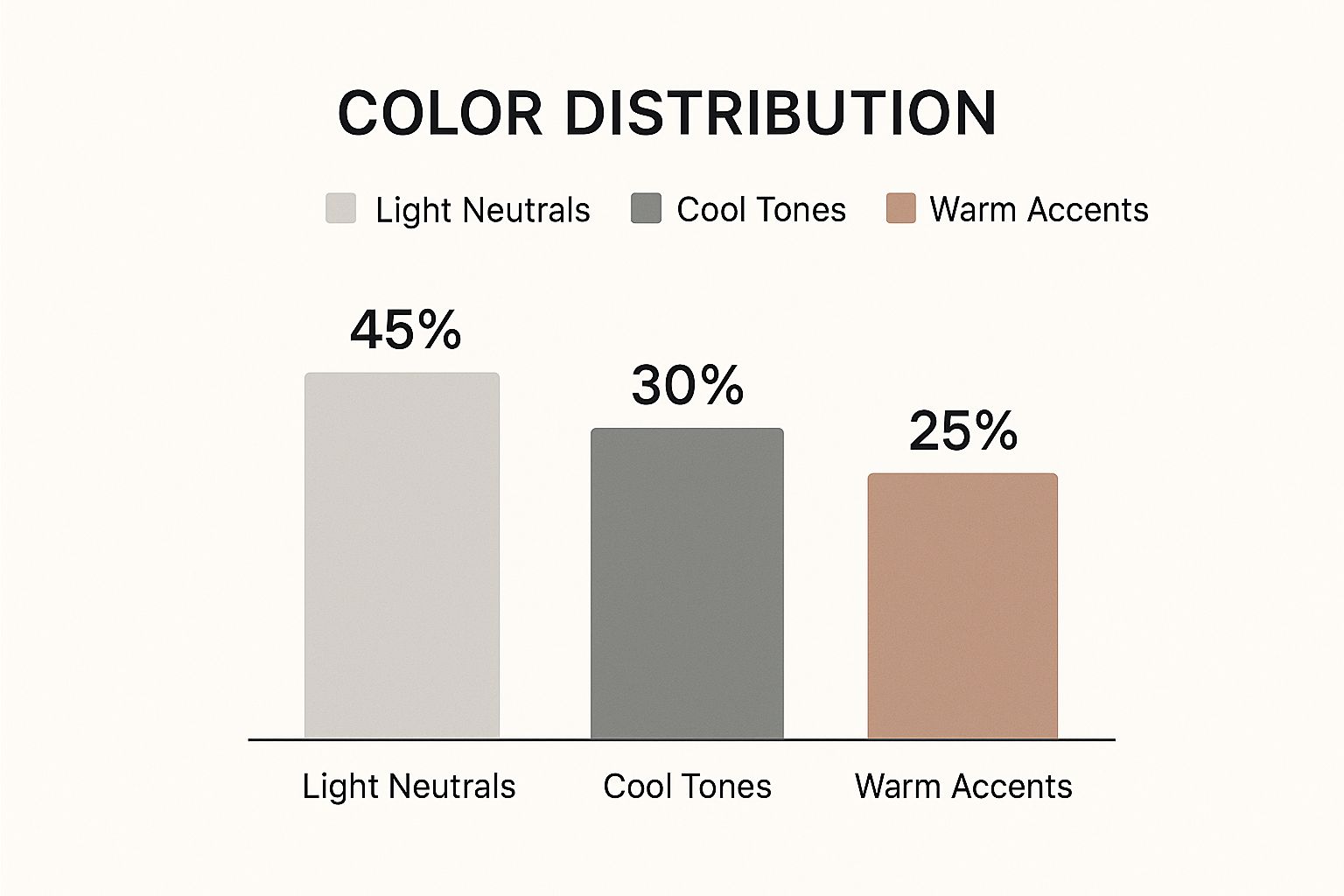
While light neutrals are the top choice at 45% for maximizing brightness, this data shows that many people are willing to trade a bit of light reflection for the specific mood that warmer or cooler tones can create.
The Bold and Modern Palette
Dark colours in a basement? It sounds counterintuitive, but when done right, it adds incredible depth and character. The trick is to use saturated colours like navy blue, deep green, or charcoal grey strategically, usually as an accent wall, not on every surface.
Pro Tip: By painting just one focal wall in a deep, rich shade and keeping the surrounding walls light, you create a powerful illusion of depth. This simple technique draws the eye, making the room feel larger and much more dynamic. It's a fantastic way to add a touch of modern sophistication without letting the darkness take over.
This approach adds a dramatic flair that feels incredibly custom. And if you're curious about how your interior choices connect with your home's overall style, our guide on stunning exterior paint colour combinations can help you create a beautifully cohesive look.
Recommended Basement Colour Palettes
To make the choice even clearer, here's a quick breakdown of how these three popular palettes stack up against each other.
| Palette Type | Best For | Mood/Feeling | Example Colours |
|---|---|---|---|
| Bright and Airy | Small spaces, home offices, gyms, multi-purpose rooms. | Open, spacious, clean, and modern. | Off-white, light grey, soft pastels (e.g., Chantilly Lace) |
| Warm and Inviting | Family rooms, home theatres, guest bedrooms, and entertainment areas. | Cozy, comfortable, intimate, and relaxing. | Greige, soft beige, earthy greens, warm greys (e.g., Revere Pewter) |
| Bold and Modern | Accent walls in media rooms, bars, or behind a key piece of furniture. | Dramatic, sophisticated, intimate, and high-contrast. | Navy blue, charcoal grey, deep emerald green (e.g., Hale Navy) |
Ultimately, the best palette depends entirely on what you want your basement to feel like. Whether you're aiming for a bright workspace or a cozy movie-night den, the right colours will help you get there.
A Practical Guide to Painting Your Basement
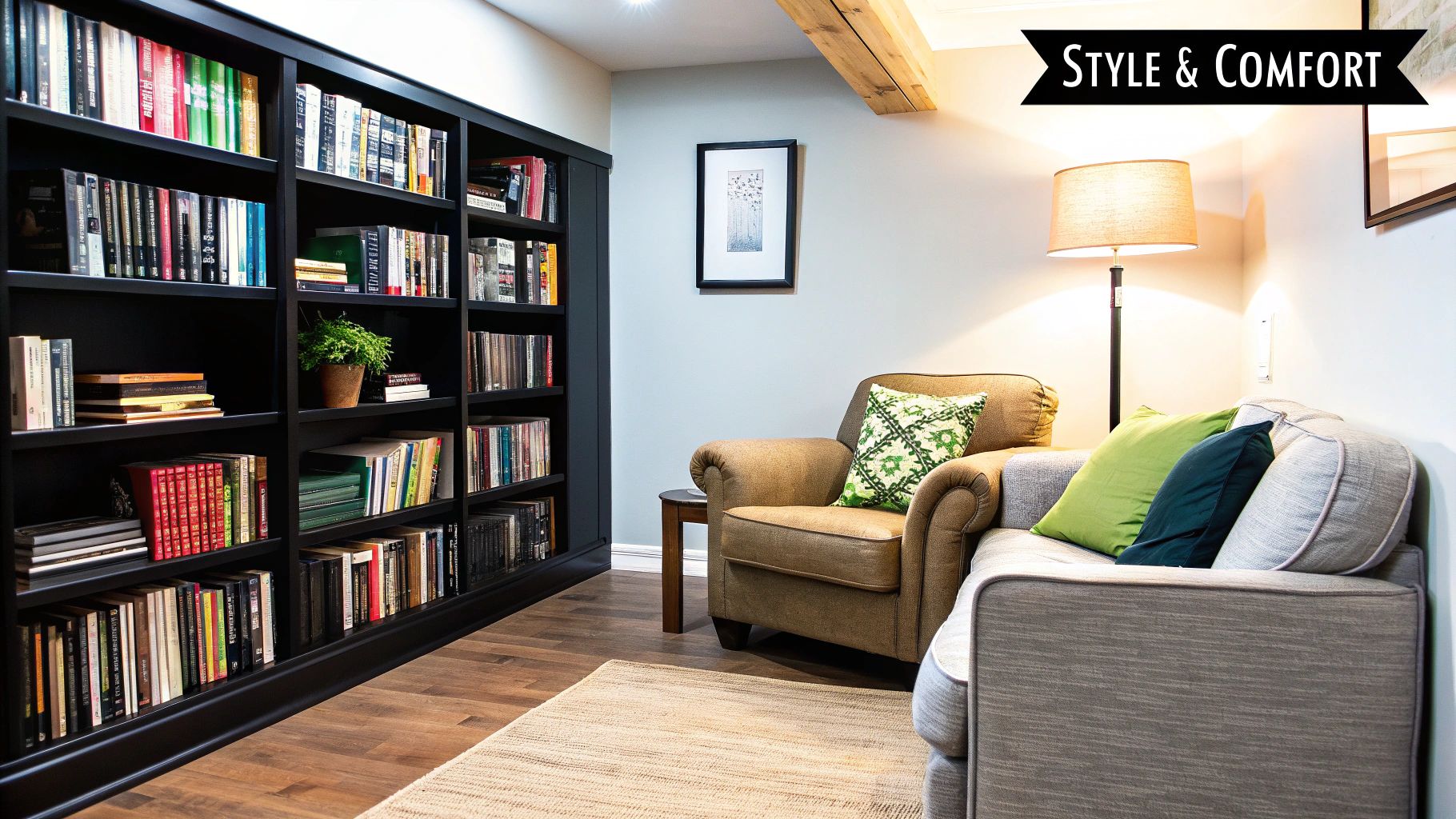
You’ve got your perfect colour palette picked out—now it’s time to get it on the walls. Painting a basement isn't quite like painting a bedroom, especially here in Toronto where older homes come with their own unique quirks.
Proper prep work isn't just a suggestion; it's the absolute key to getting a professional, long-lasting finish. Skipping this stage is a surefire way to watch your hard work peel and fail. Basements are naturally prone to dampness, so you have to start with clean, dry walls.
Before a single can of paint is opened, give those walls a good scrub to get rid of any dust, dirt, or lingering cobwebs. This gives the primer and paint a clean slate to stick to, which is exactly what you want.
Moisture is the main enemy in many GTA basements. If your space feels damp or has that classic musty smell, don't ignore it. A high-quality waterproof primer is your best friend here. It acts as a barrier, stopping moisture from creeping through the concrete and wrecking your new paint job.
Choosing the Right Paint Finish
With the walls prepped and ready, your next big decision is the paint's finish, also known as its sheen. This choice does more than just affect how your colour looks; it impacts durability and light reflection, two critical elements for any basement.
Here’s a breakdown of the best bets:
- Eggshell Finish: This is the go-to recommendation for most basement walls. It has a soft, low-lustre look that’s far more durable and easier to clean than a flat finish. In a space that could see a lot of activity, that’s a huge plus.
- Satin Finish: A step up in gloss from eggshell, a satin finish offers even better durability and reflects more light. It’s a fantastic choice for a basement playroom, gym, or bathroom where you’ll need to wipe down the walls more often.
It's usually best to steer clear of completely flat or matte finishes on basement walls. They scuff easily, are a pain to clean, and tend to showcase every tiny imperfection on the wall's surface. High-gloss finishes? Save those for trim and doors.
For a more detailed walkthrough of the entire process, check out our complete guide to painting a basement.
The Most Important Final Step
Before you grab that roller and go all-in, there's one final pro tip you cannot skip. This simple step is the ultimate defence against colour regret.
Always test your colours first! Paint large swatches on a few different walls. A tiny paint chip from the store will never tell you how a colour will truly behave in your basement's specific lighting. Watch how the swatches look in the morning, afternoon, and at night under your artificial lights. This is the only way to know for sure that you've found the one.
Common Questions About Basement Paint Colours
When it comes to picking the right colour for a basement, homeowners all over Toronto and the GTA tend to run into the same hurdles. Let's tackle some of the most common questions with practical, objective advice.
Should I Paint My Low Basement Ceiling White?
Absolutely. Painting a low basement ceiling a clean, crisp white is one of the oldest and most effective tricks for a reason. It's all about creating the illusion of height.
White has the highest Light Reflectance Value (LRV), which is a technical way of saying it bounces the most light around the room. This makes the ceiling feel higher and further away, opening up the entire space. For the best results, stick with a flat or matte finish. It does a fantastic job of hiding minor bumps and imperfections while diffusing light softly. Avoid dark colours on the ceiling—they’ll make the room feel like it's closing in on you.
What Is the Best Colour for a Basement with No Natural Light?
If your basement in Mississauga is missing windows, your best bet is to lean into light colours that have warm undertones. Think creamy off-whites, soft beiges, and welcoming greiges.
These colours really come to life under artificial lighting, casting a warm, inviting glow that fights back against that windowless feeling. It is best to steer clear of cool, stark whites in this situation, as they can sometimes look sterile or gloomy without natural sunlight to soften them. The objective is to replicate the cozy feel of sunshine, making the space feel intentionally warm.
How Can I Use Dark Colours in a Basement?
You don't have to shy away from dark colours completely. You can bring in drama and sophistication without making the basement feel like a cave. The secret is to be strategic.
The best approach is to create an accent wall. Pick one wall—maybe the one your TV is on or where you plan to hang art—and go bold with a deep charcoal grey or a rich navy blue. The trick is to keep the surrounding walls and the ceiling much lighter. This contrast is key.
By doing this, you're not shrinking the room; you're adding depth and creating a stunning focal point. It makes the space feel more dynamic and thoughtfully designed.
Do I Need a Special Type of Paint for My GTA Basement?
Yes, this is one area you don't want to cut corners on. Basements, especially with the GTA's fluctuating climate, can be prone to dampness and humidity. Using a paint with mould and mildew-resistant properties is the best choice for your home's health and the durability of your paint job.
Look for a top-quality acrylic-latex paint made for high-humidity environments, much like you’d choose for a bathroom. And remember, the paint is only as good as the prep work underneath. Make sure any moisture issues are fully dealt with and always start with a high-quality waterproof primer. That initial step is crucial for preventing peeling and bubbling later on. For more on this, check out our guide on how long does paint take to dry and why the right process makes all the difference.
At Soca Services Painting, we've seen and solved just about every basement painting challenge the GTA can throw at us. If you're looking for the best professional results near you that last, visit us at https://www.socaservicespainting.com to see how we can bring your vision to life.





3 Comments