
So, you’re asking, “how long does paint take to dry?” The objective answer is that most latex paints will be dry to the touch in about 1 hour. However, this is just the first step. You must wait at least 4 hours before applying a second coat.
Even then, the paint isn’t fully hardened. For the paint to become durable enough to withstand daily use, it needs to cure completely. This process can take anywhere from a few weeks up to a full 30 days.
Your Quick Guide to Paint Drying and Curing Times
When you’re tackling a painting project, whether it’s for a downtown Toronto condo or a family home in Mississauga, getting the timing right is crucial. Think of it like baking. Cookies might be cool enough to touch minutes out of the oven, but they need more time to completely set and achieve the perfect texture. Paint operates on a similar principle.
There are three key milestones in the paint drying process:
- Dry to the Touch: This is the initial stage where the surface no longer feels tacky. The solvent (usually water in latex paints) has begun to evaporate, but the paint film underneath is still very fragile.
- Recoat Time: This is the specified window. It’s the minimum time required before applying another coat without damaging the first one. Patience at this stage is mandatory for a smooth finish.
- Fully Cured: This is the final and most important stage. The paint has completely hardened, forming a tough, durable film that can be washed and is resistant to scuffs. Now you can hang pictures or move furniture back against the wall.
Keep in mind that your local climate, especially in the GTA, plays a significant part. A humid summer day in Southern Ontario can dramatically slow down drying times compared to a dry, breezy afternoon. Even the surface type matters; a quality primer for kitchen cabinets can help ensure the paint adheres and cures correctly.
For a quick overview, here’s a chart outlining the typical timelines for different types of paint under ideal conditions (around 20°C with 50% humidity).
Paint Drying and Curing Times at a Glance
| Paint Type | Touch Dry | Recoat Time | Fully Cured |
|---|---|---|---|
| Water-Based (Latex) | 30-60 minutes | 2-4 hours | 21-30 days |
| Oil-Based (Alkyd) | 6-8 hours | 24 hours | 7-10 days |
| Chalk Paint | 30-60 minutes | 2-4 hours | 30 days |
| Milk Paint | ~30 minutes | ~60 minutes | 30 days |
| Acrylic Paint | 20-30 minutes | ~2 hours | 14-30 days |
Remember, these are guidelines. The specific paint brand, application thickness, and your room’s environment will all influence the actual time. Always check the instructions on the paint can for the most accurate information.
Drying vs. Curing: What’s the Real Difference?
Have you ever painted a room, waited a few hours, leaned something against the wall, and discovered a permanent dent in the new finish? This frustrating moment occurs when a dry surface is mistaken for a fully cured one. Understanding the distinction is the secret to achieving the best, long-lasting paint job.
Think of drying as a surface-level event. It is the evaporation of the liquid component—water in latex paints or solvents in oil-based ones. When the liquid evaporates, the paint feels dry to the touch, often within an hour. It’s analogous to a puddle drying on a warm day; the water disappears, but the ground underneath hasn’t fundamentally changed.
The real transformation happens during the curing process.
Curing is not just about drying; it’s a deep chemical reaction. The paint molecules bond and cross-link, forging a tough, resilient shell. This is more like concrete setting—a complete change from a liquid to a durable solid.
How Different Paints Cure
The way paint cures depends on its chemical makeup, which is why drying and curing times vary so much between types.
For water-based latex and acrylic paints, curing begins as the water evaporates. This forces the polymer particles in the paint to coalesce until they fuse into one continuous, solid film. Imagine millions of microscopic particles being compressed until they form a single, seamless sheet.
Oil-based paints follow a different path. They cure through oxidation, where the oils react with oxygen in the air. This reaction triggers a molecular change, causing the paint to harden from a liquid into a tough, protective layer. It is a much slower process, which is why oil-based paints take longer to cure, even when they feel dry.
Rushing this stage is a common mistake. A wall might feel ready, but if it hasn’t fully cured, contact from furniture or attempts to clean a scuff mark can easily cause damage. The underlying structure isn’t strong enough yet. Patience is key; letting the paint fully cure provides the durability needed for daily life.
Key Factors That Influence Paint Drying
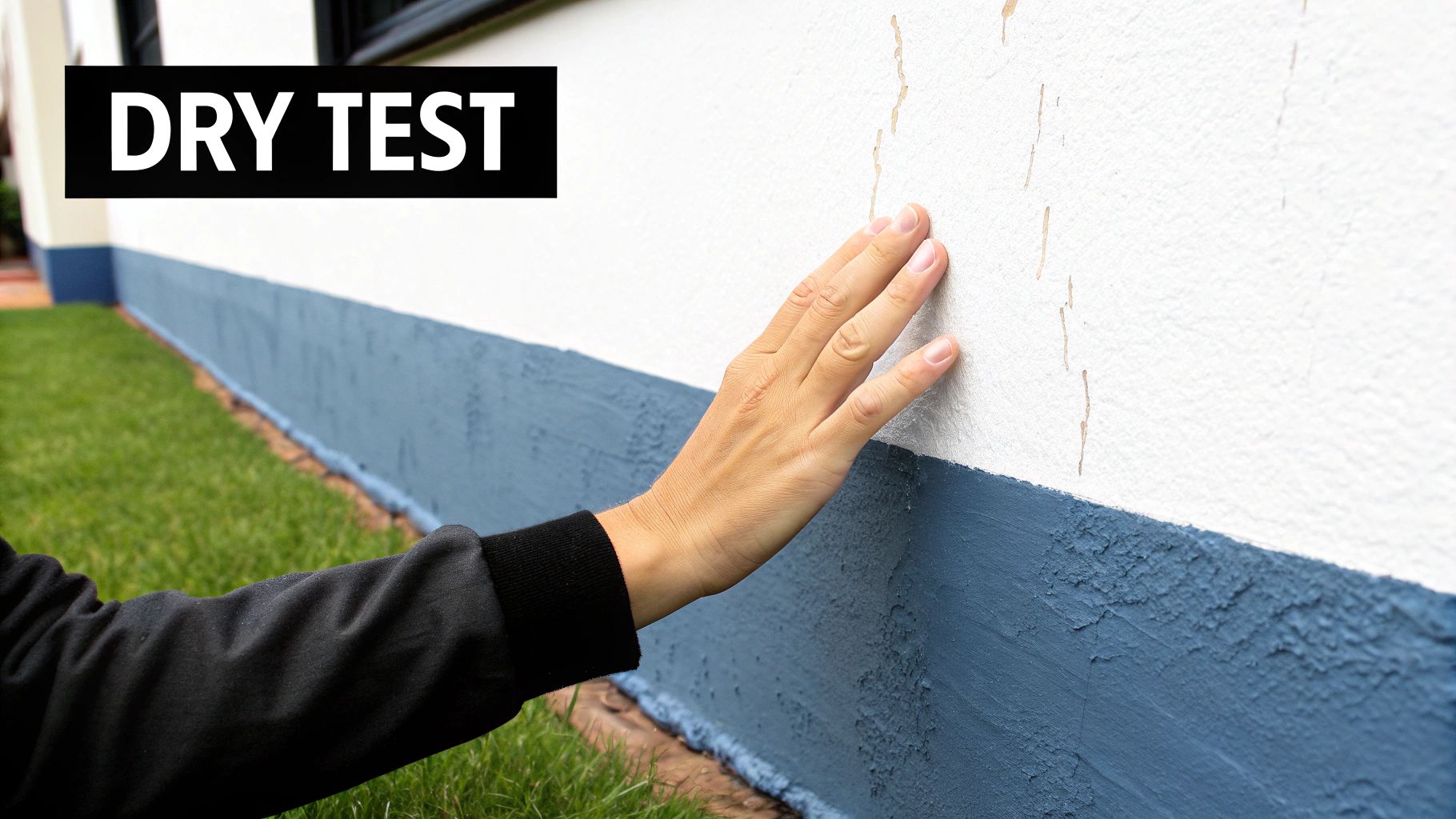
Ever wondered why paint in a cool, damp basement takes forever to dry, while a sunny room is ready for a second coat in hours? It’s not your imagination. The environment and application method are the biggest factors in determining how long your project will take.
Understanding these factors can turn a frustrating wait into a predictable process. For professional painters near you, mastering these four key elements is standard practice.
The Role of Temperature and Humidity
Temperature acts as an accelerator for paint drying. Warmer air has more energy, which speeds up the evaporation of water or solvents. For most latex and acrylic paints, the optimal range is between 10°C and 29°C.
Humidity, on the other hand, is the brake. If the air is already saturated with moisture, like during a humid Toronto summer, there’s less capacity for moisture from the paint to evaporate. High humidity can easily double or triple the drying time listed on the can, leaving a tacky surface for much longer.
As a rule of thumb, for every 10% increase in relative humidity, expect the drying time to increase by about 10-20%. This is why a breezy, dry day is best for painting.
The Importance of Ventilation and Airflow
Good ventilation is a critical tool. It physically removes evaporating moisture and solvent fumes from the painted surface. Without adequate airflow, a layer of humid air becomes trapped above the wall, acting as a barrier and slowing the process.
It’s like drying a wet towel. Hanging it outside on a windy day works well, but leaving it in a stuffy room does not. The same principle applies to your walls.
You can improve ventilation by:
- Opening windows and doors to create a cross-breeze.
- Using fans to move the air (aim them away from the wet wall to avoid blowing dust onto it).
- Activating the exhaust fan, especially in smaller spaces like bathrooms and kitchens.
How Paint Thickness Affects Drying
It may be tempting to apply one thick coat to finish quickly, but this is counterproductive. When too much paint is applied, the top layer dries first, trapping wet paint underneath.
This trapped moisture has no escape route, which can leave walls feeling soft and sticky for days or weeks. It also makes the finish prone to drips, sags, and an uneven appearance. For the best, most durable finish, two thin, even coats will always outperform one thick one. This proper technique is also why understanding interior home painting prices is important; professionals know that correct application saves on materials and future repairs.
How Long Does Paint Take to Dry? A Look at Different Types
Ever wondered why some paints are ready for a second coat in hours while others stay tacky all day? It comes down to their chemical makeup. Understanding the differences between paint types is the first step in planning your project timeline, whether you’re painting a condo in downtown Toronto or a home in Mississauga.
The three main types are latex, oil-based, and acrylic paints. Each dries and hardens uniquely, which is why the answer to “how long does paint take to dry?” is never one-size-fits-all.
This visual breaks down the initial surface-dry times for common paints.
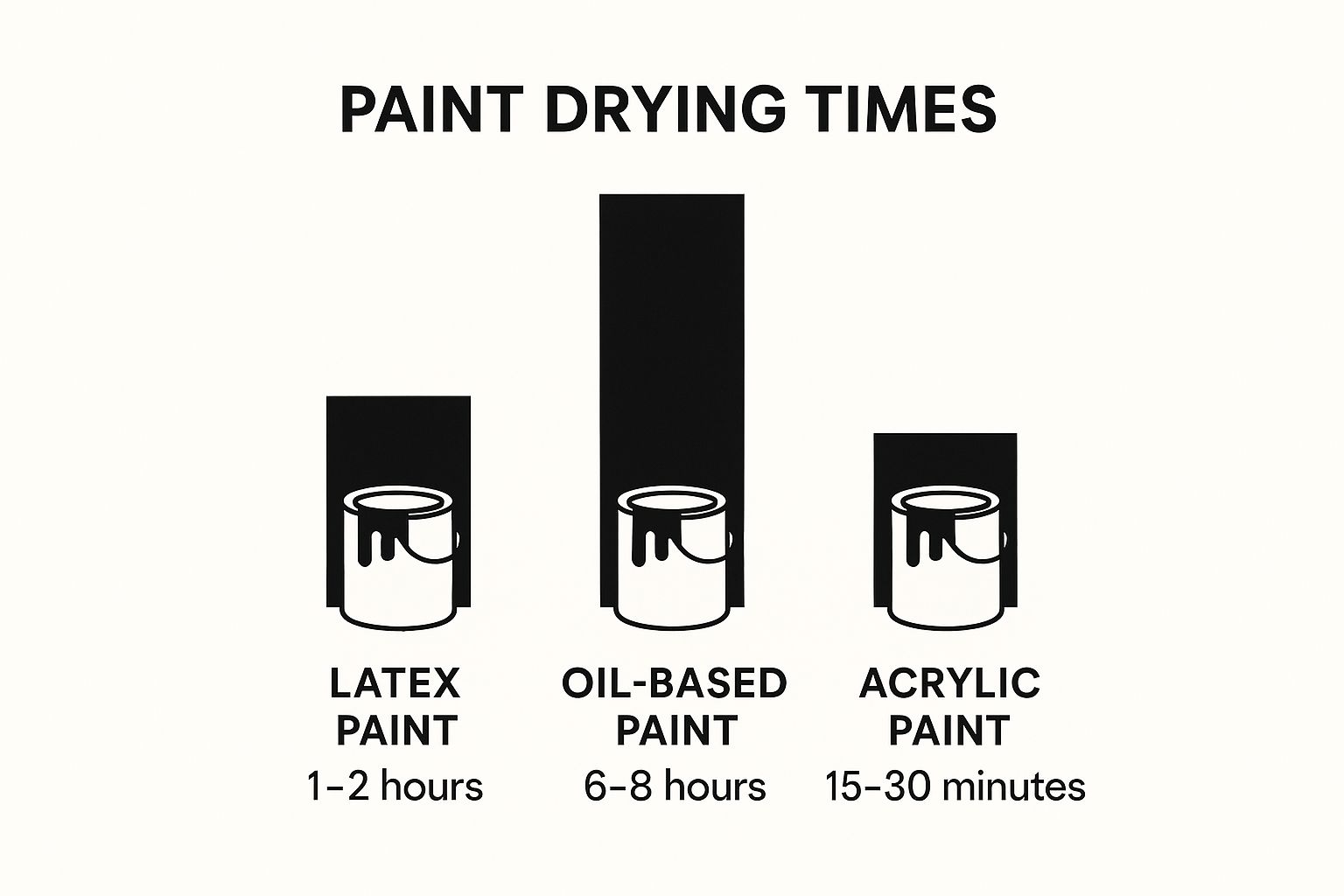
As you can see, there’s a significant difference in how fast each paint becomes safe to touch. Water-based options are quicker, while traditional oil-based paints require more time.
Latex and Acrylic Paints: The Water-Based Champions
Latex paint is the standard for most interior walls across the GTA, and for good reason: it dries fast. As a water-based product, its drying process is simple evaporation. When applied, the water evaporates, allowing the latex particles to coalesce and form a solid film.
In a typical room, expect latex paint to be touch-dry in about 1 hour. You can often apply the next coat in just 2 to 4 hours. This quick turnaround makes it a favourite for both professionals and DIYers. For more tips on getting the best finish, see our guide on how to paint interior walls.
Acrylic paint is another water-based option similar to latex. It often contains more acrylic polymers, which can make it more durable and slightly faster to dry. In some cases, it can feel dry to the touch in as little as 15 to 30 minutes.
The key point for water-based paints is that drying relies on evaporation. This is why humidity and airflow have such a large impact on how quickly your walls will be ready.
Oil-Based Paints: The Slow and Steady Workhorse
Oil-based paints are different. They don’t just dry; they cure. This occurs through oxidation, where the resins in the paint react with oxygen. It’s a slower, more methodical process that forms an incredibly hard and durable finish. This makes oil-based paints ideal for high-impact surfaces like trim, doors, and cabinets.
That durability comes at the cost of time. Oil-based paint needs 6 to 8 hours to become touch-dry, and you must wait a full 24 hours before applying a second coat. The trade-off is that it cures faster than latex, reaching maximum hardness in about 7 days. Choosing the best paint is always a balance between the speed you want and the toughness you need.
Comparing Latex vs Oil-Based Paint Characteristics
To understand the trade-offs, it helps to compare the core differences. Each paint has its place, and knowing their strengths is key to a successful project.
| Characteristic | Latex (Water-Based) Paint | Oil-Based (Alkyd) Paint |
|---|---|---|
| Drying Time | Touch-dry in ~1 hour; recoat in 2-4 hours | Touch-dry in 6-8 hours; recoat in 24 hours |
| Cleanup | Easy cleanup with soap and water | Requires mineral spirits or turpentine |
| Durability | Good, flexible finish; less prone to cracking | Excellent, hard finish; resists scuffs and stains |
| Odour | Low odour | Strong, solvent-based odour |
| Typical Uses | Interior walls, ceilings, some exterior siding | Trim, doors, cabinets, high-moisture areas |
Ultimately, the choice between latex and oil-based paint depends on the job. For quick, low-odour projects like painting a bedroom, latex is the clear winner. For a kitchen cabinet refresh that needs to withstand years of use, the patience required for an oil-based paint will deliver the best results.
How to Make Paint Dry Faster Without a Fuss
Watching paint dry is notoriously slow, but you can influence the process. You can accelerate it by creating the optimal environment for the paint’s water or solvents to evaporate. It’s about giving the paint what it needs to cure properly, just a bit faster.
The simplest method is to increase air movement. Set up fans to create cross-ventilation, but follow this pro tip: never point them directly at the wet surface. A direct blast can push dust and debris into your fresh paint, ruining the finish. Aim fans toward an opposite wall or out a window to circulate air gently, pulling moisture away without causing issues.
If you’re in a damp room like a basement, or painting during a humid Toronto summer, a dehumidifier is your best tool. It actively removes moisture from the air, which can dramatically reduce drying time and help the paint cure more effectively.
Applying Paint Like a Pro
How you apply the paint is as important as the room’s conditions. For fast drying and the best look, always apply thin, even coats.
It’s a classic mistake: applying one thick coat to finish the job in one go. This is counterproductive. The top layer dries, trapping wet paint underneath. The result? A finish that stays tacky for days and is more likely to bubble, wrinkle, or crack.
Always remember: two thin, well-applied coats are superior to one thick coat every time. This is especially true for detailed work like furniture or cabinetry. If you’re tackling such a project, our guide on how to paint kitchen cabinets has excellent advice for achieving a durable, factory-smooth look.
Your Top Paint Drying Questions Answered
Even when you know the basics of how long paint takes to dry, real-world questions arise during a project. Here are answers to common situations you might face while painting in the GTA.
Can I Apply a Second Coat of Paint After One Hour?
It is tempting. Most latex paints feel dry in about an hour, but this is deceptive. You must wait for the official ‘recoat time’ on the can, typically 2-4 hours.
If you recoat too early, the roller can lift the first layer of paint off the wall. The base coat hasn’t hardened enough to support the moisture and weight of a second coat, resulting in a streaky, weak finish.
What Happens If It Rains After I Paint an Exterior Surface?
Rain is the enemy of a fresh exterior paint job. If the paint is still wet, rain can cause streaks or wash it away entirely.
Even if it’s touch-dry but not cured, the excess moisture interferes with the curing process. This leads to a less durable finish that is more likely to peel. For any outdoor painting, a clear weather window of at least 24-48 hours is mandatory.
Tacky paint is almost always a sign of a problem with the environment or application. The usual causes are high humidity, temperatures below 10°C, or poor airflow.
Applying the paint too thickly is another common mistake that leads to a sticky finish. The solution is to improve the conditions: use fans to circulate air, run a dehumidifier, or gently raise the room’s temperature. The persistent smell from slow-drying paint can also be an issue; learn more about how to get rid of paint odours in our guide. Ultimately, patience is the best way to fix a sticky situation and get a perfectly cured surface.
For a professional finish that stands the test of time, trust the experts. Soca Services offers the best painting services across Toronto and the GTA. Contact us today for a flawless result without the guesswork. https://www.socaservicespainting.com

6 Comments